
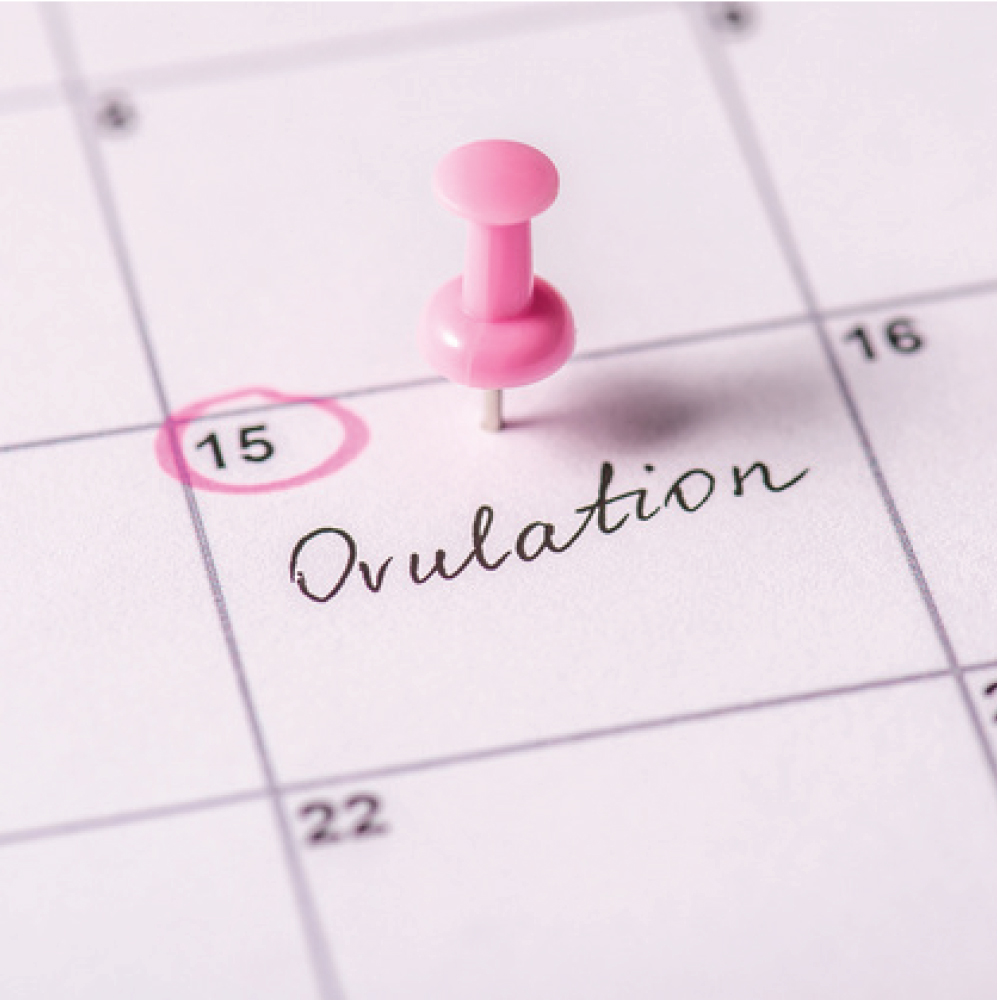
Ovulation plays a central role in conception. Knowing when ovulation occurs can help couples trying to conceive naturally and can also provide important insight for patients experiencing fertility challenges. An ovulation calculator estimates your most fertile days based on the timing of your menstrual cycle.
Ovulation Calculator
At LA IVF Clinic in Los Angeles, Aykut Bayrak, MD, FACOG, uses ovulation tracking as one of several tools to evaluate reproductive health, identify ovulatory patterns, and guide fertility treatment planning. While calculators can be helpful, they are most accurate for individuals with regular cycles and should not replace medical evaluation when cycles are irregular or pregnancy does not occur.
Enter the first day of your last menstrual period and your average cycle length to estimate your most fertile days. If your cycles are irregular or unpredictable, please contact our clinic for a personalized fertility evaluation and ovulation assessment.
Understanding Ovulation and Fertility
To conceive, a mature egg must be released from the ovary and fertilized by sperm. This typically occurs during a short window each menstrual cycle. For many couples, pregnancy happens naturally through well-timed intercourse. However, according to the CDC, approximately one in eight women experience difficulty becoming pregnant.
If pregnancy has not occurred after 12 months of unprotected intercourse (or after 6 months for women over age 35), it may be time to consult a fertility specialist. Difficulty conceiving can be related to ovulation disorders, hormonal imbalances, structural conditions, or male factor infertility.
The Most Common Ovulation-Related Diagnoses
Ovulation disorders are among the most common causes of infertility. These occur when the ovaries do not release healthy eggs regularly or at all.
Several medical conditions and lifestyle factors can interfere with normal ovulation.
Several medical conditions and lifestyle factors can interfere with normal ovulation.
- Age: As women approach menopause, ovarian reserve and egg quality naturally decline.
- PCOS (Polycystic Ovary Syndrome)
- Endometriosis
- Primary Ovarian Insufficiency (POI)
Additional factors such as thyroid disorders, autoimmune disease, certain medications, chronic stress, extreme exercise, eating disorders, and significant weight fluctuations may also affect ovulation.
Ways to Track Ovulation
An ovulation calculator is one method of identifying fertile days, particularly for individuals with consistent cycle lengths. Other commonly used ovulation tracking methods include:
Calendar Method
- Track the first day of your period over several months to identify cycle patterns.
- Subtract 12–16 days from the expected start of your next period to estimate ovulation.
- For irregular cycles, use the shortest and longest cycle lengths to estimate a broader ovulation window.
While helpful, the calendar method may be less accurate for individuals with irregular cycles.
Cervical Mucus Method
As ovulation approaches, cervical mucus becomes clearer, thinner, and more slippery. Monitoring these changes over time may help identify fertile days. Additional methods include basal body temperature tracking and ovulation predictor kits, which detect hormonal changes associated with ovulation.
Ask Dr. Bayrak
Have a question you don’t see here?
Submit it directly to Dr. Bayrak and receive an answer within 48 hours.